The Maillard Reaction Explained: The Secret Behind Golden Crusts and Rich Flavors
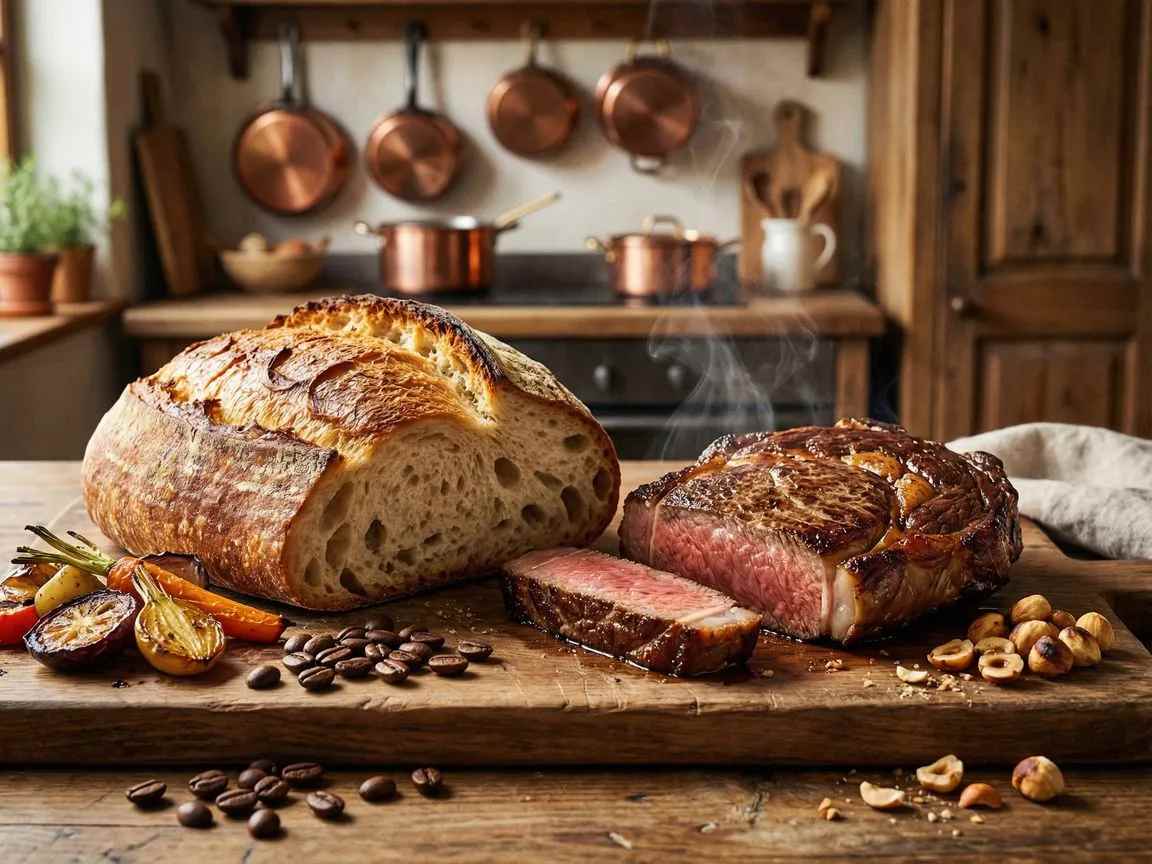
Every golden bread crust, every seared steak with a mahogany shell, every batch of cookies with dark, caramelized edges owes its existence to a single chemical cascade. The Maillard reaction – a non-enzymatic browning process between amino acids and reducing sugars – generates hundreds of volatile flavor compounds, pigments, and aromas that no seasoning blend can replicate. It is, by a wide margin, the most flavor-productive transformation that occurs in your kitchen.
Yet most home cooks rely on intuition: “get the pan hot,” “don’t crowd the meat,” “wait for the color.” These rules work, but they are symptoms of deeper principles. The difference between a pale, steamed-tasting chicken thigh and one with a shattering, savory-sweet crust comes down to five controllable chemical variables – temperature, moisture, pH, reactant concentration, and time. Understanding them converts guesswork into precision.
The chemistry behind browning is genuinely elegant. A single amino acid meeting a single sugar molecule under heat triggers a branching chain of reactions – Schiff base formation, Amadori rearrangement, Strecker degradation – each fork producing different aldehydes, pyrazines, furans, and melanoidins. If chemical structures and reaction equations interest you, an ai chemistry solver can break down these pathways step by step, from the initial carbonyl–amino condensation all the way to the final polymer products.
This article maps the full science of the Maillard reaction onto practical cooking and baking technique – from molecular mechanism to skillet to garden-fresh roasted vegetables – so you can control browning with the same confidence a pastry chef brings to laminated dough.
What Is the Maillard Reaction and Why Should Every Cook Understand It?
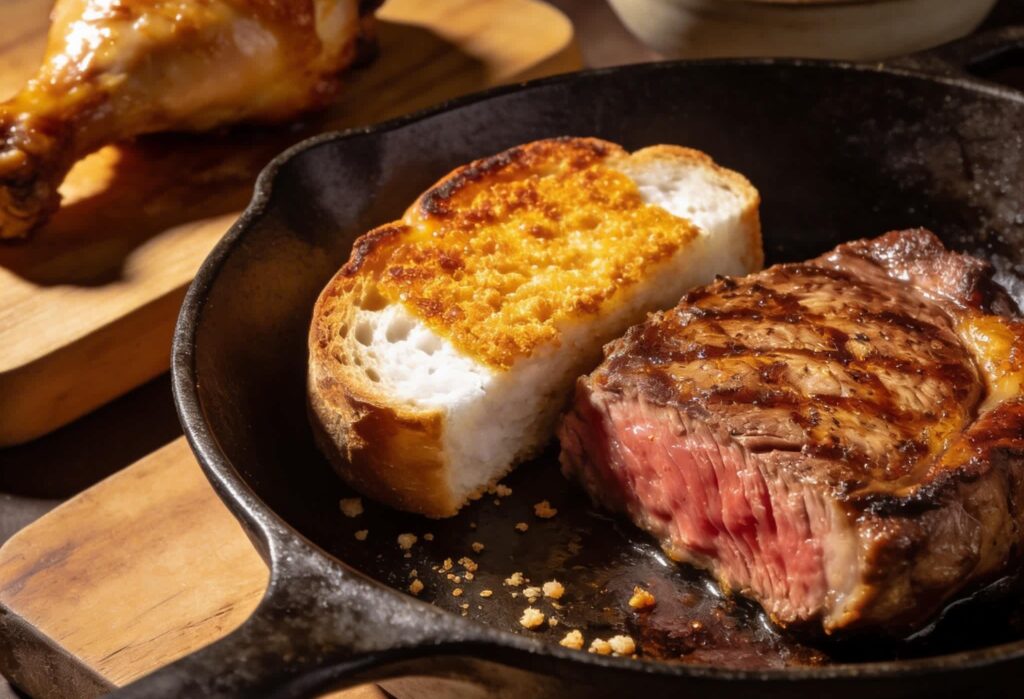
The Maillard reaction is a cascade of chemical transformations between amino acids (from proteins) and reducing sugars (glucose, fructose, lactose, maltose) that begins when food surfaces reach approximately 140°C (280°F). It produces the brown color, complex flavor, and distinctive aroma of seared meat, toasted bread, roasted coffee beans, and hundreds of other heated foods.
French physician Louis-Camille Maillard first documented this amino acid–sugar interaction in 1912 while studying how the body metabolizes proteins. He heated glycine with glucose and observed browning and CO2 release – but his findings remained a biochemical curiosity for decades. In 1953, American chemist John E. Hodge at the USDA published the first comprehensive reaction pathway scheme, classifying the Maillard cascade into distinct stages. Hodge’s framework remains the standard reference in food chemistry textbooks, including Fennema’s Food Chemistry and Harold McGee’s On Food and Cooking.
The reaction’s practical value is straightforward: it manufactures flavor compounds that do not exist in raw food. A raw steak contains amino acids and trace sugars, but none of the pyrazines, thiazoles, or furanones that define “seared meat” aroma. These molecules are synthesized exclusively by the Maillard cascade under heat. The same logic applies to bread crust versus crumb, raw onion versus roasted, green coffee bean versus roasted bean. Browning does not merely change color – it builds an entirely new flavor architecture from the molecular level up.
Who Discovered the Maillard Reaction?
Louis-Camille Maillard (1878–1936), a physician and chemist at the University of Paris, published his initial observations in 1912 in Comptes Rendus de l’Académie des Sciences. His experiment was simple: heating amino acids with sugars in aqueous solution produced brown pigments and carbon dioxide. Maillard recognized the reaction’s relevance to biology but did not map its culinary implications.
The culinary and industrial understanding came from John E. Hodge, who in 1953 published a detailed mechanistic scheme in the Journal of Agricultural and Food Chemistry. Hodge identified three stages – initial condensation, intermediate rearrangement, and final polymerization – and showed how each stage branches into distinct chemical pathways depending on conditions. His work turned the Maillard reaction from a laboratory observation into a controllable tool for food science and manufacturing.
Is All Browning in Cooking the Maillard Reaction?
No. Three distinct browning mechanisms operate in the kitchen, each driven by different chemistry:
| Mechanism | Reactants Required | Onset Temperature | Flavor Profile |
| Maillard reaction | Amino acids + reducing sugars | ~140°C (280°F) | Savory, roasted, umami, complex |
| Caramelization | Sugars only (no protein needed) | ~160°C (320°F) for glucose; ~170°C for sucrose | Sweet, butterscotch, nutty, bitter at extremes |
| Enzymatic browning | Polyphenol oxidase + phenolic compounds + O2 | Room temperature | Flat, often unpleasant, astringent |
Enzymatic browning is the process that turns a sliced apple or avocado brown within minutes. It requires no heat – only oxygen and an intact enzyme. Cooks prevent it with acid (lemon juice), blanching (to denature the enzyme), or vacuum sealing.
The Maillard reaction and caramelization frequently co-occur in the same pan, but they follow independent chemical pathways and produce different sets of flavor molecules.
What Happens at the Molecular Level When Food Browns?
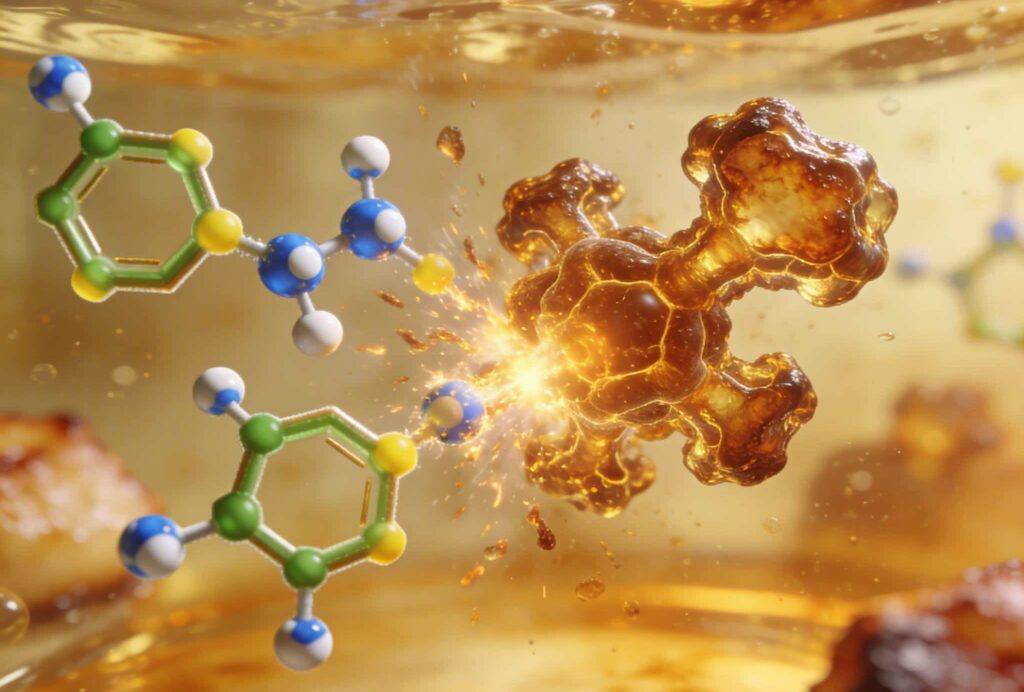
The Maillard reaction unfolds across three sequential stages. Stage one: a reducing sugar’s carbonyl group (C=O) reacts with an amino acid’s amino group (NH2) to form an unstable Schiff base, releasing one molecule of water. Stage two: that Schiff base rearranges into a more stable Amadori product (or Heyns product, if the sugar is a ketose), which then fragments into dozens of reactive intermediates – deoxyosones, α-dicarbonyl compounds, and furfurals. Stage three: those intermediates recombine, cyclize, and polymerize into melanoidins (brown pigments) and hundreds of low-molecular-weight volatile compounds responsible for flavor and aroma.
The total number of known Maillard products exceeds a thousand. A single seared steak surface contains well over 600 distinct volatile compounds. This combinatorial complexity is the reason browned food tastes so much richer than raw.
What Are Schiff Bases and Amadori Products – and Why Should You Care?
A Schiff base is the first molecular product of the Maillard reaction: the carbonyl carbon of a reducing sugar bonds covalently with the nitrogen of an amino acid’s amino group, releasing H2O. This compound is chemically unstable – it exists for fractions of a second before undergoing rearrangement.
That rearrangement produces the Amadori product (specifically, 1-amino-1-deoxy-2-ketose when the starting sugar is an aldose like glucose). The Amadori product is the critical branching point: depending on temperature, pH, and water activity (aw), it can degrade through at least three separate pathways – 1,2-enolization (favored at pH ≤7, producing furfurals and HMF), 2,3-enolization (favored at pH >7, producing reductones and pyrazines), or Strecker degradation (producing amino acid-specific aldehydes and CO2). Every flavor distinction you taste between browned chicken, toasted bread, and roasted coffee traces back to which of these pathways dominated during cooking.
What Is Strecker Degradation and Why Does It Create Aroma?
Strecker degradation is a sub-reaction within the Maillard cascade where a reactive α-dicarbonyl compound (produced during Amadori product fragmentation) reacts with a free amino acid. The amino acid loses its carboxyl group as CO2 and its amino group transfers to the dicarbonyl, yielding two products: a new amino ketone (which can later form pyrazines) and a Strecker aldehyde – a volatile molecule whose structure mirrors the original amino acid’s side chain.
Because each amino acid has a unique side chain, each produces a unique aldehyde with a distinct aroma:
- Cysteine → 2-mercaptoacetaldehyde → meaty, roasted, sulfurous
- Leucine → 3-methylbutanal → malty, chocolate, dark-fruit
- Phenylalanine → phenylacetaldehyde → floral, honey, rose
- Methionine → methional → baked potato, earthy
This is the molecular reason a seared ribeye does not smell like toasted sourdough, despite both undergoing the same overarching Maillard cascade. The amino acid composition of beef versus wheat flour dictates which Strecker aldehydes form, and those aldehydes define the dominant aroma.
What Are Melanoidins?
Melanoidins are high-molecular-weight, nitrogen-containing brown polymers formed in the final stage of the Maillard reaction. They are the source of visible brown color in bread crusts, dark beer, soy sauce, roasted malt, balsamic vinegar, and espresso.
Their chemical structure remains only partially characterized due to extreme heterogeneity – no two melanoidin polymers are structurally identical. Research published in Food Chemistry and the Journal of Agricultural and Food Chemistry has documented several functional properties: melanoidins exhibit antioxidant activity (scavenging free radicals in vitro), antimicrobial effects against certain bacterial strains, and prebiotic behavior – they pass undigested into the colon, where gut bacteria ferment them. These properties add a nutritional dimension to browned-food consumption beyond taste and texture.
What Is the Difference Between the Maillard Reaction and Caramelization?
The Maillard reaction requires amino acids and reducing sugars, begins at ~140°C, and generates predominantly savory, roasted, and umami flavor compounds – pyrazines, thiazoles, Strecker aldehydes. Caramelization involves pyrolysis and oxidation of sugars alone (no amino acids), starts at ~160°C for glucose and ~170°C for sucrose, and produces predominantly sweet compounds – diacetyl (buttery), maltol (toasty), furanones (caramel).
A direct side-by-side:
| Parameter | Maillard Reaction | Caramelization |
| Required reactants | Amino acids + reducing sugars | Sugars only |
| Onset temperature | ~140°C (280°F) | ~160°C–180°C (320°F–356°F) |
| Dominant flavor | Savory, roasted, meaty, bready | Sweet, butterscotch, nutty |
| Color compounds | Melanoidins | Caramelans, caramelens, caramelins |
| Key volatiles | Pyrazines, thiazoles, Strecker aldehydes | Diacetyl, maltol, furanones |
Can the Maillard Reaction and Caramelization Happen at the Same Time?
Yes, and in most cooking they do. Any food that contains both protein and sugar – an onion (free amino acids + glucose/fructose), a cookie (flour protein + sucrose broken down by heat), a glazed roast (meat protein + sugar in the glaze) – undergoes both reactions simultaneously once the surface temperature exceeds ~160°C. The resulting flavor has more dimensions than either process delivers alone: the savory depth of Maillard products layered with the sweetness and butterscotch notes of caramelization.
Professional chefs exploit this overlap deliberately. A Maillard-only sear on a dry steak tastes meaty and roasted; add a sugar-containing glaze, and caramelization introduces sweetness and complexity. A pan sauce deglazed with wine or stock dissolves both types of brown surface compounds – melanoidins and caramelans – producing a layered reduction that no pre-made sauce can match.
What About Enzymatic Browning – How Is That Different?
Enzymatic browning has no connection to heat-driven chemistry. When you cut an apple, avocado, or eggplant, ruptured cells release polyphenol oxidase (PPO), an enzyme that catalyzes the oxidation of phenolic compounds in the presence of atmospheric oxygen. The resulting quinones polymerize into brown melanin-like pigments.
Key distinctions:
- No heat required – occurs at room temperature and even under refrigeration
- Flavor contribution is negative – produces flat, astringent, sometimes bitter off-flavors
- Prevention methods differ entirely: acid (lowering pH below ~4.0 denatures PPO), blanching (heat-denatures the enzyme), ascorbic acid (reduces quinones back to colorless phenols), and vacuum sealing (removes oxygen)
Enzymatic browning and the Maillard reaction share only the visual similarity of “brown color.” Their chemistry, conditions, and culinary implications are unrelated.
What Five Factors Control How Fast and How Deep Food Browns?
Five variables govern the Maillard reaction’s rate and intensity: (1) temperature, (2) surface moisture / water activity, (3) pH and alkalinity, (4) concentration of available amino acids and reducing sugars, and (5) time and thermal contact efficiency. Adjusting any single factor produces a measurable change in browning depth, speed, and flavor profile.
At What Exact Temperature Does the Maillard Reaction Start – and When Does It Become Burning?
The Maillard reaction initiates at approximately 140°C (280°F) and its rate increases exponentially with temperature – roughly doubling for every 10°C rise, consistent with Arrhenius kinetics. The “optimal browning zone” for most cooking applications falls between 150°C and 175°C (300°F–350°F), where flavor compounds accumulate rapidly without excessive degradation.
Above 180°C (356°F), pyrolysis – the thermal decomposition of organic molecules – begins to dominate. Pyrolysis generates acrid, bitter compounds (polycyclic aromatic hydrocarbons among them) and carbon char. The visible transition from golden-brown to black marks the shift from Maillard-dominant to pyrolysis-dominant chemistry. This boundary is not a fixed line but a gradient: at 190°C, browning and charring overlap; above 200°C, charring accelerates sharply.
Why Does Wet Food Refuse to Brown?
Liquid water on the food surface absorbs thermal energy and converts it into latent heat of vaporization, capping the surface temperature at 100°C (212°F) – 40°C below the Maillard threshold. Browning cannot begin until the surface dries completely and its temperature climbs past 140°C.
This single physical fact explains several universal kitchen rules:
- Pat meat dry with paper towels before searing – removes the surface water layer
- Don’t crowd the pan – too many wet pieces release steam faster than it can escape, trapping moisture around the food and effectively steaming instead of searing
- Dry-brining (salting uncovered in the refrigerator for 12–24 hours) draws out surface moisture via osmosis, then reabsorbs it into the interior, leaving the outer surface measurably drier
- Air-drying poultry skin (uncovered in the fridge overnight) achieves the same result – dehydrated skin hits Maillard temperatures within seconds of entering a hot oven
Water activity (aw) – a measure of how much “free” water is available – influences browning rate at a finer level. Maximal Maillard activity occurs at intermediate aw values (0.6–0.8); below 0.3 (very dry) or above 0.9 (very wet), the reaction slows. Dried milk powder browns during storage at room temperature precisely because its aw sits in this optimal range.
How Does Baking Soda Speed Up Browning?
Baking soda (NaHCO3) raises surface pH into alkaline territory. The initial condensation step of the Maillard reaction – where the sugar’s carbonyl group bonds with the amino acid’s amino group – proceeds faster at higher pH because the amino group is more nucleophilic in its deprotonated form (NH2) than in its protonated form (NH3+).
Practical applications:
- Bavarian pretzels: dipped in a 3–4% lye (NaOH) solution before baking, pushing the surface to pH ~13–14. The extreme alkalinity generates that signature mahogany color and distinctive malty bitterness in 12–15 minutes.
- Baking soda on onions: a pinch (roughly 41 teaspoon per large onion) raises pH enough to cut caramelization time from 45 minutes to under 20.
- Baking soda rub on chicken skin or steak: a thin dusting (21 teaspoon per pound) applied 15–30 minutes before cooking accelerates surface browning and enhances crispness. The alkaline surface also disrupts peptide bonds in skin proteins, promoting blistering and crunch.
The trade-off: excessive baking soda introduces a soapy, metallic off-taste and can push the reaction into over-browning. The effective range for most cooking is a trace amount – just enough to shift pH by 1–2 points.
How Do You Get a Perfect Sear on Meat?
A deep, even sear requires three conditions met simultaneously: a completely dry surface (so thermal energy drives browning instead of steam), a pan temperature at or above 230°C (450°F), and minimal crowding (so steam escapes instead of accumulating). Cast iron and carbon steel skillets outperform stainless steel and nonstick for searing because their mass stores more thermal energy and resists temperature drops when cold food is added.
Oil selection matters: choose a fat with a high smoke point – refined avocado oil (271°C), grapeseed oil (216°C), or clarified butter/ghee (250°C). Smoke point limits the maximum temperature you can achieve before the oil breaks down into acrid compounds.
Why Does My Steak Turn Grey Instead of Golden-Brown?
A grey steak surface has never exceeded 100°C. The three most common causes:
- Residual surface moisture – the meat came straight from the package without blotting. The water layer absorbs all the pan’s thermal energy as steam.
- Insufficient preheating – placing the steak in a lukewarm pan means the initial heat transfer goes to warming the pan, not browning the surface. A properly preheated cast iron skillet should lightly smoke before the protein is laid in.
- Overcrowding – multiple pieces in contact or too close together release more steam than the pan can vent. The food sits in a steam pocket, temperature drops below 140°C, and the surface poaches rather than sears.
The fix for all three: one steak per pan, patted bone-dry, into a ripping-hot skillet with a thin film of high-smoke-point oil.
Is the Reverse Sear Better for Browning Than Searing First?
For thick cuts exceeding 3 cm (1.2″), the reverse sear produces a superior crust with better interior uniformity. The method: roast the meat in a low oven (110°C–135°C / 225°F–275°F) until the core reaches 5–8°C below target doneness, rest briefly, then sear in a maximally hot pan for 60–90 seconds per side.
Why it works: the extended low-temperature oven phase evaporates surface moisture thoroughly. By the time the steak reaches the hot skillet, the exterior is drier than any amount of paper-towel blotting can achieve. The result is near-instant Maillard browning – a deep, uniform crust forming before the interior overcooks. An additional benefit: the low initial cook produces edge-to-edge even doneness, eliminating the grey band of overcooked meat directly beneath the crust that conventional sear-first methods create.
How Does the Maillard Reaction Work in Baking?
In baking, the Maillard reaction occurs on exposed dough and batter surfaces where proteins (gluten from wheat flour, albumin from eggs, casein and whey from milk) meet reducing sugars (glucose, fructose, maltose from starch breakdown, lactose from dairy) under dry oven heat. It is responsible for the golden-brown crust of sandwich bread, the deep amber shell of a croissant, the dark edges of chocolate chip cookies, and the near-black surface of a lye-dipped pretzel.
Interior crumb color, by contrast, stays pale because the high moisture content inside the dough cap its temperature near 100°C – below the Maillard threshold. Crust formation is literally a surface-moisture story: the outside dries past the critical 140°C point, while the inside does not.
Why Does an Egg Wash Make Bread So Much Browner?
An egg wash coats the dough surface with a concentrated layer of Maillard reactants. Egg white delivers albumin (a protein rich in lysine – a particularly reactive amino acid in the Maillard cascade). Yolk contributes lecithin and fat, which improve heat transfer across the dough surface. Both white and yolk contain traces of glucose.
Other washes produce different effects through the same underlying chemistry:
| Wash Type | Dominant Reactant | Browning Mechanism | Visual Result |
| Whole egg | Albumin + glucose + fat | Maillard (primary) + fat-aided heat transfer | Rich golden-brown, glossy |
| Egg yolk only | Fat + lecithin + protein | Maillard + enhanced conduction | Deep amber, very glossy |
| Milk or cream | Casein + lactose | Maillard (lactose is a strong reducing sugar) | Soft golden, matte |
| Sugar water | Sucrose (inverts under heat) | Caramelization (primary) | Shiny, brittle, lighter brown |
| Butter | Fat only | Heat transfer only (no protein/sugar) | Minimal browning, rich sheen |
What Makes Pretzel Crusts So Distinctively Dark?
The traditional Bavarian pretzel dip is a 3–4% sodium hydroxide (NaOH) solution, which raises the dough surface to a pH between 13 and 14. At this extreme alkalinity, the Maillard reaction’s initial step – carbonyl–amino condensation – proceeds at a rate many times faster than at neutral pH. The result: a deep mahogany to near-black crust with a distinctive malty, slightly bitter flavor profile, achieved in just 12–15 minutes of standard oven baking.
Home bakers who prefer not to handle lye use a baked baking soda substitute: NaHCO3 heated to 135°C (275°F) for one hour converts to sodium carbonate (Na2CO3), which dissolves to a pH of ~11 – lower than lye but significantly higher than untreated dough, producing a visibly darker pretzel than plain baking soda achieves.
Why Do Cookies Brown More at the Edges Than the Center?
Cookie edges are thinner and have a higher surface-area-to-mass ratio than the thicker center. They lose moisture faster, breaking through the 100°C evaporative ceiling sooner. Once an edge’s temperature climbs above 140°C, the Maillard reaction (between flour protein and sugars) and caramelization (of free sugars) begin. The center, still steaming and soft, remains below the browning threshold.
This moisture gradient explains the classic contrast: crisp, deeply browned edges surrounding a pale, chewy middle. Bakers control the gradient by adjusting dough hydration, sugar type (brown sugar retains more moisture than white due to molasses content), and bake time. Pulling cookies when the center still looks slightly underdone produces the best texture – carryover heat firms the center on the cooling rack without pushing it past the browning tipping point.
How Does Browning Transform Garden-Fresh Vegetables?
Roasting or hard-searing garden produce triggers the Maillard reaction between the vegetables’ indigenous free amino acids (glutamine, asparagine, glutamic acid) and their natural sugars (glucose, fructose, sucrose). The resulting flavor compounds – pyrazines, furanones, furfurals – replace mild grassy or starchy raw-vegetable flavors with deep, nutty, caramelized, and savory notes that did not exist in the raw ingredient.
This transformation is the strongest argument for high-heat cooking of fresh produce. A raw carrot from the garden tastes sweet and vegetal; roasted at 220°C (425°F) until caramelized at the edges, it tastes of toffee, brown butter, and roasted nuts. The same carrot, steamed, retains its raw-adjacent flavor because its surface never exceeds 100°C.
Why Do Roasted Carrots and Onions Taste So Much Sweeter Than Raw?
Two processes produce the perceived sweetness. First, heat breaks down cell walls, releasing trapped sugars that were previously bound in the plant’s cellular matrix – free sugar concentration on the surface increases. Second, both the Maillard reaction and caramelization convert those liberated sugars (and newly formed sugar fragments from polysaccharide breakdown) into sweet-tasting volatile compounds – furanones, maltol, isomaltol, and diacetyl.
The sweetness you perceive in a deeply roasted onion is not simply “freed” pre-existing sugar. A significant portion consists of entirely new molecules synthesized by heat-driven chemistry. This is why a roasted onion tastes different from a raw onion sprinkled with sugar – the volatile sweet compounds carry aroma that enhances the perception of sweetness far beyond what sugar alone contributes.
Cutting vegetables into wedges or thick slices before roasting maximizes the exposed flat surface area for direct contact with the hot sheet pan – increasing conductive heat transfer and accelerating both moisture evaporation and Maillard browning.
Why Do Different Foods Produce Completely Different Browning Flavors?
The Maillard reaction is not a single reaction but a combinatorial matrix: each amino acid paired with each reducing sugar, at a given pH and temperature, produces a unique portfolio of Strecker aldehydes, pyrazines, furans, and other volatile compounds. Because steak, bread, coffee, and chocolate each have radically different amino acid profiles and sugar compositions, their Maillard product sets are distinct – and so are their aromas.
Coffee beans contain high concentrations of free asparagine, proline, and glutamic acid reacting with sucrose-derived monosaccharides during roasting at 200°C–230°C, generating over 800 identified volatile compounds. Cocoa beans undergoing roasting after fermentation produce a different set, dominated by methylpyrazines and Strecker aldehydes from leucine and valine. Bread crust volatiles are shaped by free proline (from flour) reacting with maltose (from starch degradation by amylase), yielding the characteristic “bready” 2-acetyl-1-pyrroline.
Which Amino Acid Creates Which Flavor When Browned?
Each amino acid’s unique side chain determines its Strecker aldehyde – and thus the dominant aroma note when that amino acid participates in the Maillard reaction:
| Amino Acid | Strecker Aldehyde | Dominant Aroma Note | Found Prominently In |
| Cysteine | 2-Mercaptoacetaldehyde | Meaty, roasted, savory | Beef, pork, poultry |
| Proline | (cyclic – unique pathway) | Bready, biscuit, cracker | Wheat flour, bread crust |
| Leucine | 3-Methylbutanal | Malty, chocolate, dark fruit | Cocoa, dark beer, cheese |
| Valine | 2-Methylpropanal | Nutty, cocoa-like | Roasted nuts, chocolate |
| Phenylalanine | Phenylacetaldehyde | Floral, honey, rose | Honey, certain roasted teas |
| Methionine | Methional | Baked potato, earthy, cooked | Potato, cooked vegetables |
| Isoleucine | 2-Methylbutanal | Fruity, fermented, malty | Fermented foods, aged cheese |
| Glycine | Formaldehyde (trace amounts) | Toffee, caramel-like | General browning base note |
| Asparagine | (decomposes to acrylamide pathway) | Roasted potato, grain | Potato, cereal grains |
This matrix explains a counterintuitive observation: adding a small amount of soy sauce (rich in free glutamic acid and multiple free amino acids from hydrolysis) to a pan sauce or marinade disproportionately amplifies browning flavor – it supplies additional Maillard reactants, not just salt and umami.
Is the Maillard Reaction Bad for Your Health?
The Maillard reaction itself is not harmful – humans have consumed browned food for at least 250,000 years (the approximate date of controlled fire use). However, at elevated temperatures or prolonged heating, specific Maillard-adjacent pathways produce compounds of legitimate health concern: acrylamide in starchy foods, heterocyclic amines (HCAs) in high-temperature cooked muscle meat, and advanced glycation end-products (AGEs) in both food and human metabolism.
The dose-dependent nature of these risks means that moderate browning – “golden, not black” – occupies safe territory for most people, while heavy charring and repeated extreme-heat cooking warrant caution.
What Is Acrylamide and How Can You Reduce It at Home?
Acrylamide (C3H5NO) forms when asparagine – a free amino acid abundant in potatoes, cereal grains, and coffee – reacts with reducing sugars above ~120°C. The compound was discovered in cooked food in 2002 by Swedish researchers. The IARC classifies acrylamide as a Group 2A probable human carcinogen based on animal studies, though direct evidence in humans at dietary exposure levels remains limited.
Effective home mitigation strategies:
- Soak cut potatoes in water for 15–30 minutes before frying or roasting – this leaches free asparagine and surface sugars, reducing acrylamide formation by up to 50% in peer-reviewed studies
- Target golden-brown, not dark brown – acrylamide concentration increases exponentially with color intensity past the medium-brown stage
- Add a splash of acid – vinegar or lemon juice (1 tablespoon per liter of blanching water) lowers surface pH, which shifts the reaction away from the asparagine-acrylamide pathway
- Store potatoes above 8°C – cold storage (<6°C) triggers “cold sweetening,” converting starch to reducing sugars and increasing acrylamide precursors
Are Charred and Grilled Foods Actually Dangerous?
Heavily charred meat contains heterocyclic amines (HCAs) formed when amino acids, sugars, and creatine (present only in muscle tissue) react at temperatures above 300°C. Separately, fat dripping onto open flames produces polycyclic aromatic hydrocarbons (PAHs) that rise in smoke and deposit on the food surface. Both HCAs and PAHs are classified as probable or possible carcinogens by the IARC (Group 2A and 2B, respectively).
Risk is dose-dependent and modifiable:
- Marinating meat before grilling has been shown to reduce HCA formation by 57%–88% in studies published in the Journal of Food Science, attributed to antioxidant compounds in herbs, spices, and acidic marinades scavenging free radical intermediates
- Avoiding direct flame contact and flipping frequently reduces PAH deposition
- Trimming visible char removes the highest-concentration surface layer
- Using lower-than-maximum grill temperatures keeps the surface in the Maillard zone (150°C–175°C) rather than the pyrolysis zone (>250°C)
The practical guideline from both the FDA and EFSA is to aim for golden-to-medium-brown browning levels and to limit consumption of foods with heavy black char.
Frequently Asked Questions About the Maillard Reaction
Can the Maillard Reaction Happen at Room Temperature?
Yes, but at an extremely slow rate. The Maillard reaction is thermally driven – its rate follows Arrhenius kinetics, so lowering the temperature from 150°C to 25°C reduces the reaction speed by orders of magnitude. Nonetheless, over weeks and months, measurable Maillard browning occurs: stored powdered milk gradually yellows, self-tanning lotions work via Maillard-type reactions between dihydroxyacetone and skin amino acids at body temperature (37°C), and aged balsamic vinegar deepens in color partly through long-term Maillard chemistry.
Can the Maillard Reaction Happen in Water or in a Microwave?
In an open pot of boiling water – no. Water’s boiling point at standard atmospheric pressure is 100°C, 40°C below the Maillard threshold. However, in a pressure cooker, elevated pressure raises the boiling point to ~120°C–125°C at 15 psi, which is enough to initiate light Maillard browning. This is why pressure-cooker stocks develop a richer color and deeper flavor than conventional simmered stocks in a fraction of the time.
Standard microwaves heat food by exciting water molecules internally, which keeps the surface wet and well below 140°C. Food microwaved conventionally does not brown. Dedicated microwave browning plates – coated with a ferrite-based susceptor material – absorb microwave energy and convert it to conducted heat at 200°C+, enabling localized Maillard browning on the contact surface.
Does Sugar Type Affect Browning?
Substantially. Only reducing sugars – those with a free aldehyde or ketone group – can participate in the Maillard reaction’s initial condensation step. Glucose, fructose, lactose, and maltose are all reducing sugars and react readily. Sucrose (table sugar) is a non-reducing disaccharide: its anomeric carbons are locked in the glycosidic bond, preventing condensation with amino acids. Sucrose must first hydrolyze into glucose and fructose (via heat or acid) before it can serve as a Maillard reactant.
This is why recipes using honey (high in free glucose and fructose), corn syrup (glucose), or milk powder (lactose – a highly reactive reducing sugar) produce noticeably faster and deeper browning than recipes relying on granulated sucrose alone. A practical baking adjustment: replacing 15–20% of granulated sugar with honey or corn syrup visibly improves crust color without significantly altering texture.
Can You Get Maillard Browning in an Air Fryer?
Yes. An air fryer is a compact convection oven that circulates hot air at 180°C–200°C via a high-speed fan, easily exceeding the Maillard threshold. The rapid airflow serves a dual function: it delivers heat to the food surface efficiently and wicks away surface moisture faster than a conventional oven. This accelerated drying is why air-fried food often achieves crispier, more evenly browned results than the same food at the same temperature in a standard oven – the surface breaks through the 100°C moisture ceiling sooner, and the Maillard reaction gets a head start.